

87% fewer nodes
TransUnion TruAudience cut servers from 450 to 60 while improving P99 performance by 100x
eBook
Your database bill is just the tip of the iceberg. Download the eBook that breaks down the 5 places true database costs are hiding. From licensing traps and infrastructure bloat to the hidden costs of downtime, and delayed product delivery. Learn how the right real-time database architecture can reduce TCO by up to 80%.
 See why cost-per-node and cost-per-GB database pricing models can hide 5–10x true costs
Learn how real companies cut database server counts by 73–87% without losing performance
Get a framework for evaluating the full TCO of any database: licensing, infrastructure, personnel, and downtime
Many teams compare databases using license fees, cost-per-node pricing, or cost-per-GB costs. For distributed databases built for real-time, enterprise-scale workloads, that number reveals only part of the total cost of ownership. Database TCO also includes the infrastructure needed to run it, the personnel required to manage it, the cost of downtime when it fails, and the opportunity cost of features you can't ship fast enough.
This e-Book breaks down each of these hidden cost centers with real pricing comparisons and real customer examples, including how companies like TransUnion, Criteo, and Adjust cut their server counts by 73–87% after switching database architectures, and how a single minute of downtime can cost a business like Dream11 $1 million in lost revenue. Whether you're evaluating a new database or auditing the one you already have, use this framework to compare database licensing, infrastructure, operations, and business risk before selecting or replacing a database.
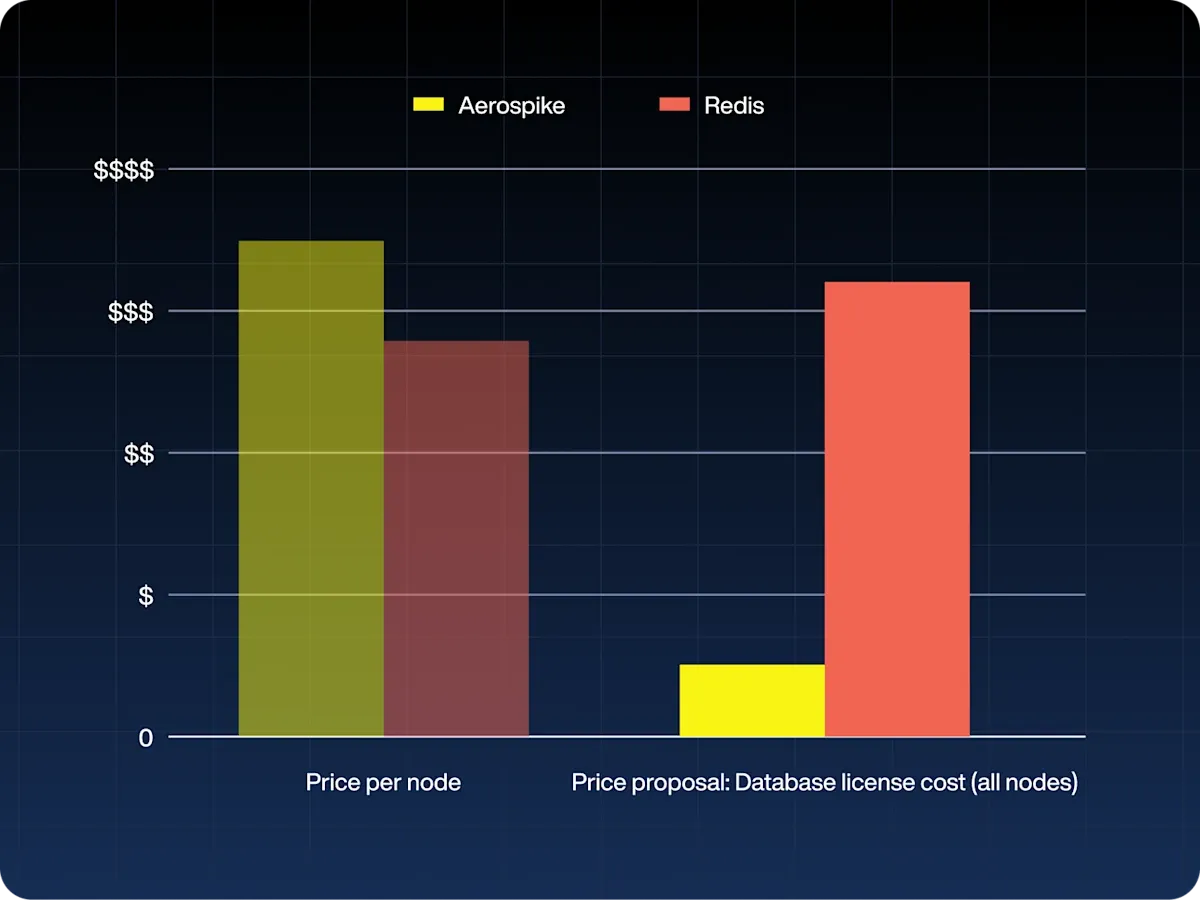
Cost-per-node and cost-per-GB pricing can make a database look inexpensive,but they hide the real driver of database spend: how many nodes you actually need for your performance requirements. In one customer comparison, Redis appeared cheaper per node but required 23 nodes to match the performance of 3 Aerospike nodes. Evaluate database TCO using the full architecture, not the unit price.
AdTech, FinTech, gaming, and e-commerce platforms cannot afford infrastructure bloat or downtime or hidden database costs. See how leading organizations evaluate database total cost of ownership across performance, reliability, and operational efficiency—and why a high-performance architecture can cost less at scale.

TransUnion TruAudience cut servers from 450 to 60 while improving P99 performance by 100x

Criteo and Adjust GmbH slashed infrastructure while improving reliability

The cost of downtime for real-time platforms like Dream11
Growing infrastructure should not force operations teams to grow at the same rate. One financial services organization doubled its server footprint to 1,200 nodes without adding a developer, while Forrester's Total Economic Impact research found that an Aerospike database migration reduced projected management needs from 25 FTEs to 3-4. The result: lower operational overhead as the database scales.



With (other databases), there's a lot more configuration and tuning out of the box. Aerospike? Pretty much change a few things, and you're good to go.

Operational overhead was nearly zero, and we shaved three months off our launch schedule as a result.

For the level of reliability and availability that we need, the system needs to be available... It's a mission-critical system for those customers.