Blog
How AI shoppers will break your Redis cache
AI agents crawl your entire catalog at machine speed, polluting the hot set and cratering your Redis hit rate. See how Aerospike keeps every read fast.
Blog
AI agents crawl your entire catalog at machine speed, polluting the hot set and cratering your Redis hit rate. See how Aerospike keeps every read fast.

Black Friday tests your infrastructure harder than any other day. This year, a large and growing share of that load won't be people clicking; it'll be artificial intelligence (AI) agents crawling. You already know they're here, and you already know they shop differently: one request fans out across your catalog at machine speed instead of browsing a few screens.
But what does that do to your cache? Traditional Redis caching approaches aren’t well designed for this traffic.
A Redis cache in front of your database is a bet on a hot set. A small, stable slice of trending SKUs stays warm in memory, most requests hit it, and the cold long tail sits on the slow path because hardly anyone asks for it.
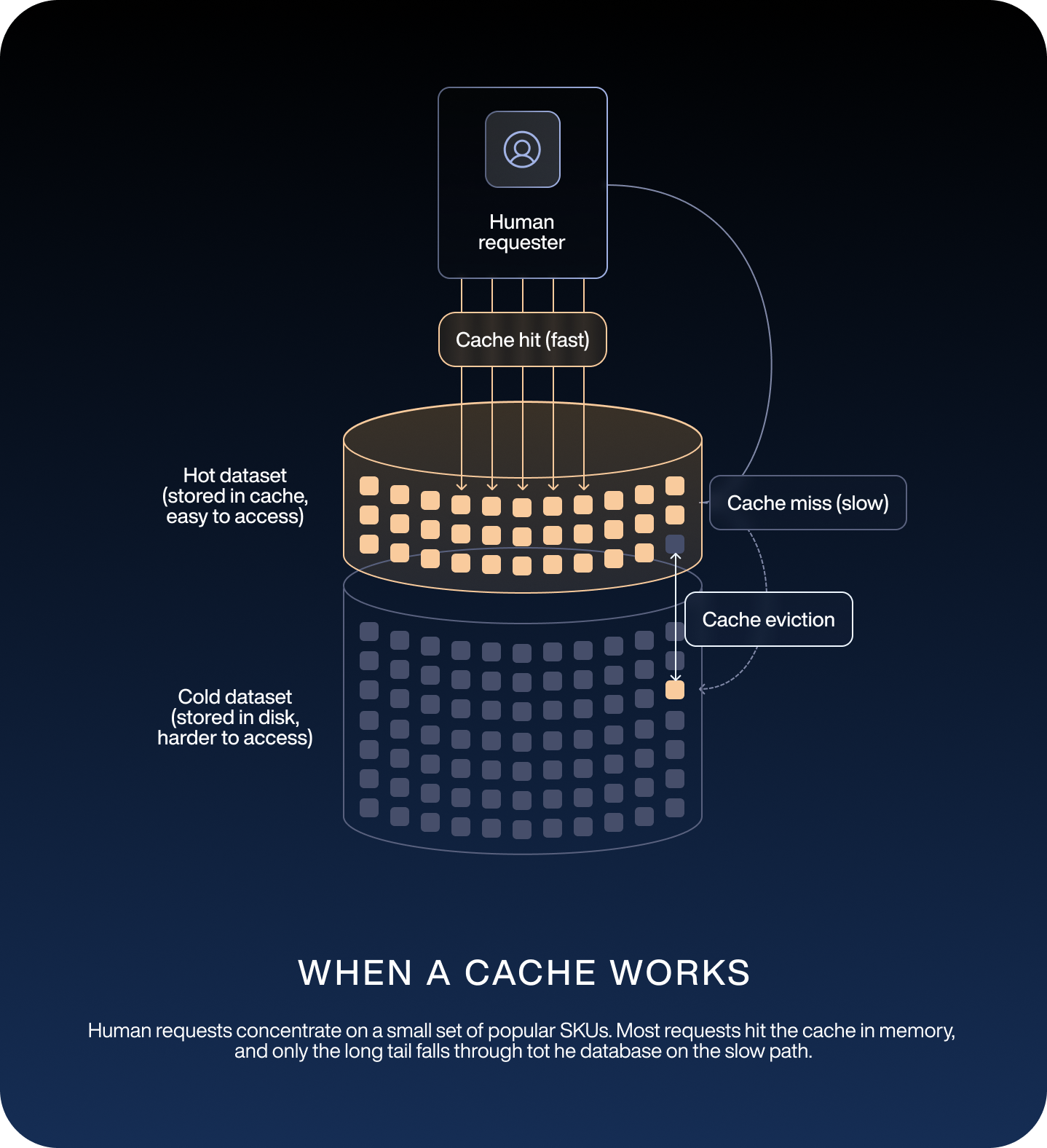
That works when your shoppers are human and predictable, but not for AI agents.
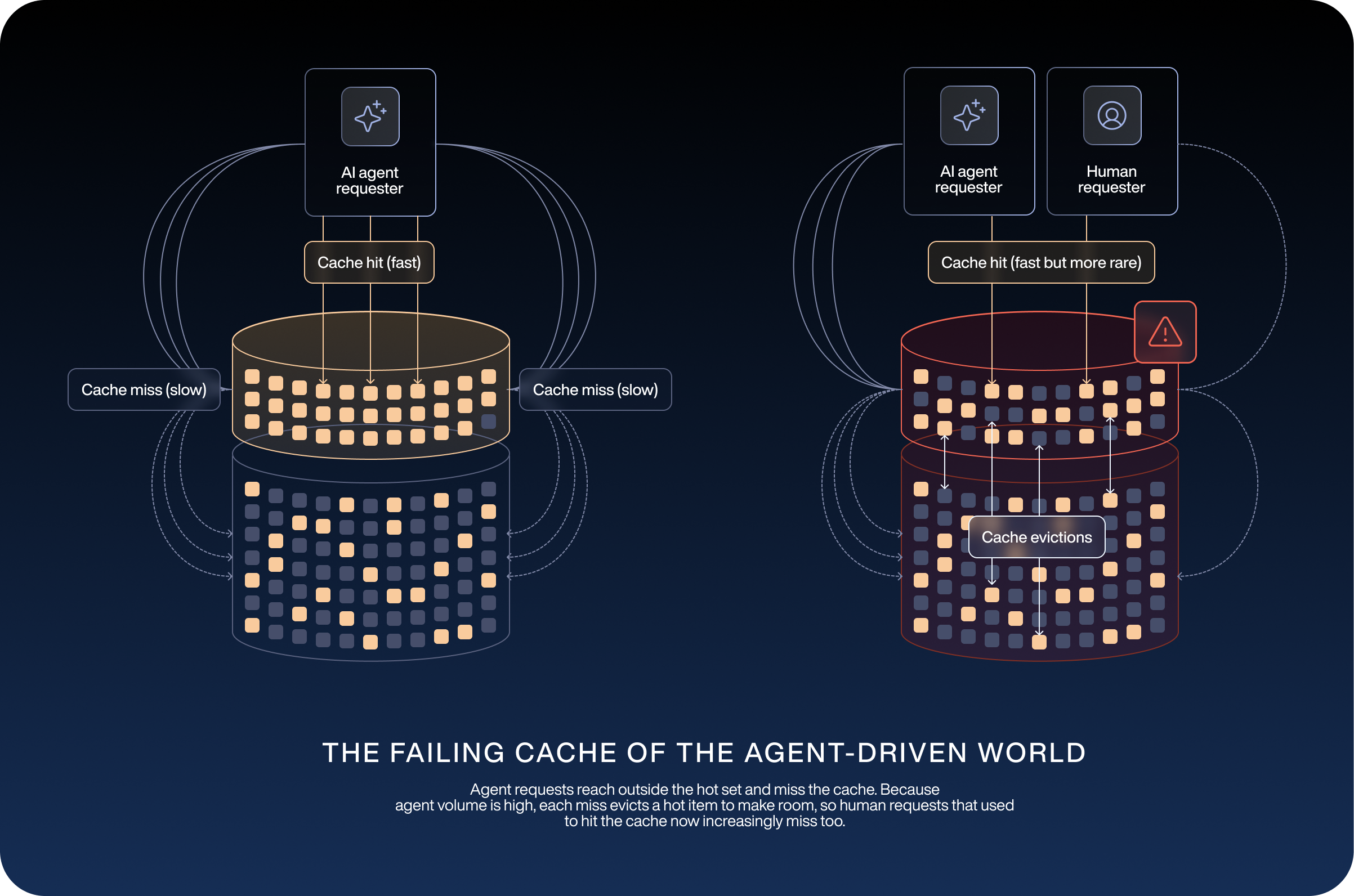
They don't limit themselves to the hot set. One query reaches across hundreds of SKUs, such as prices, stock, variants, and reviews, including the cold corners no human would open, so those reads miss the cache and fall to the slow path.
Worse, those reads don't just miss the cache; they pollute it. Every cold record an agent pulls in evicts something to make room, and what gets evicted is hot data serving your human shoppers. The agent's queries are one-offs, never requested again, but they've flushed your working set out of memory to hold records nobody will ask for twice.
So, the cache hit rate doesn't just fall for the agents; it falls for everyone. Your normal shoppers, hitting the same bestsellers they always hit, now miss a cache churned full of cold, random data. Everything gets worse at once: cold queries are slow, and the traffic that used to be fast isn't anymore.
Once the cache hit rate slips, requests spill onto the slow path, the database behind takes load it was never sized for, latency climbs, timeouts trigger retries, and the retries pile on more load. That's a cache stampede, and it lands on the one day that determines your whole year's margin.
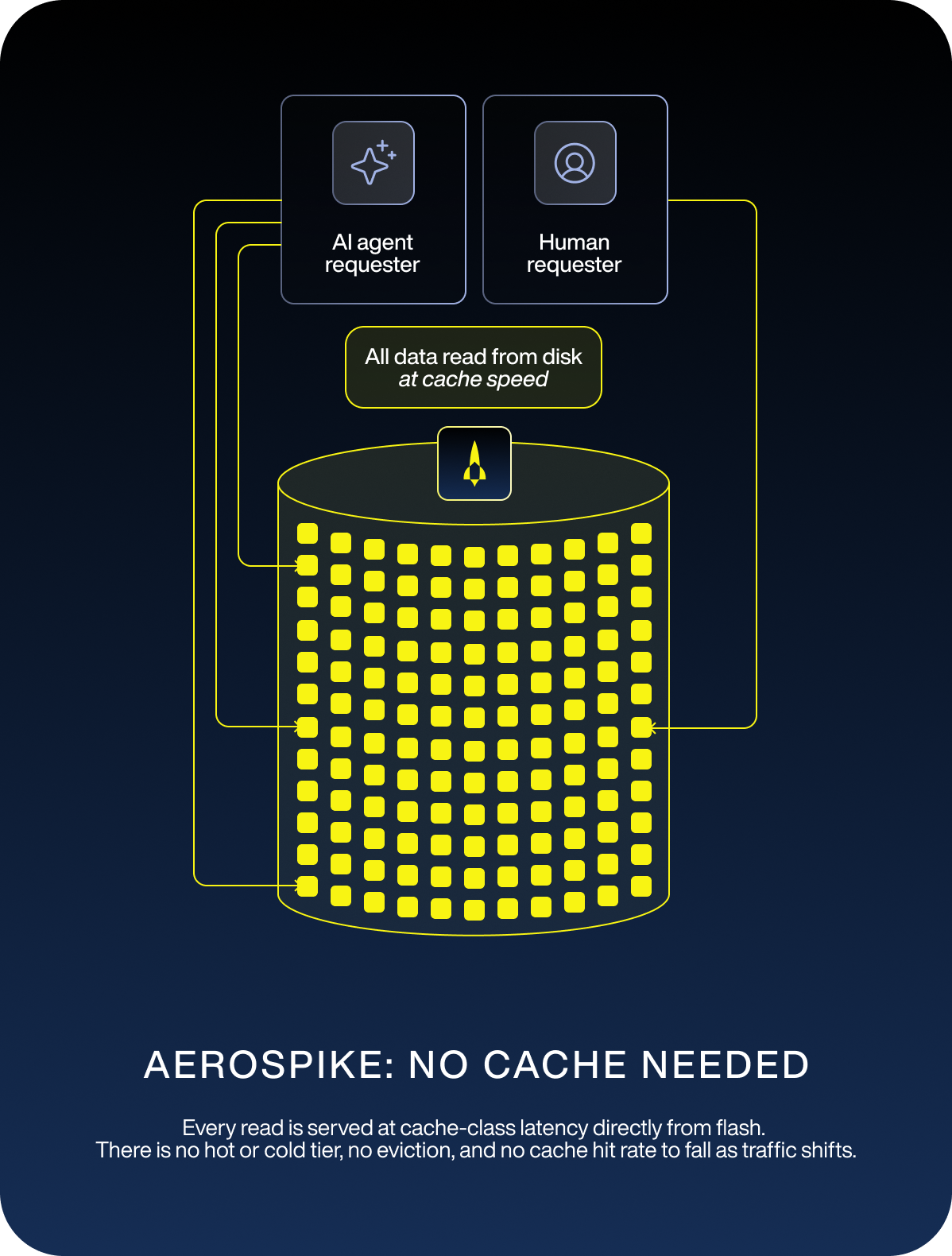
What changes if your cache holds ten times as much data at the same latency? Instead of holding the hot data and hoping, you hold everything; the whole catalog gets served at cache-rate latency, with no cold tier behind it and nothing to evict. No pollution, no load cascading to your underlying databases.
That's what Aerospike does. It serves reads straight from disk (NVMe flash) at latency comparable to running fully in memory, so you stop paying RAM prices to keep data hot, and the same hardware holds roughly ten times the data. Drop it in where Redis is today, and the cache miss disappears. Every lookup is served from the fast path, popular or obscure, and nothing gets flushed because nothing lives outside. An agent crawling item 4,000 gets the same fast answer as your bestseller, and it costs your human shoppers nothing. You size for the load you see, with no cache hit rate to crater when traffic shifts.
The good news is that your cache is one tier you can replace quickly: it sits in a well-defined spot, holds no system of record, and uses a protocol your other systems already know. You have time to make this change, including A/B testing, before the holiday season code freeze.
The reflex for years has been simple: need it fast, put Redis in front, hope the cache hit rate holds. AI shoppers break that belief. Don’t end up on the losing side of the AI shopping revolution because you haven’t prepared for what you know is coming.
For a deeper understanding and more insights, explore these additional resources.
See more